How high collimation is a game changer in photolithography ?
How high collimation is a game changer in photolithography ?
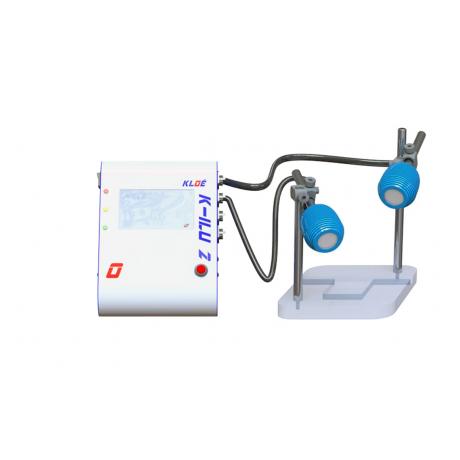
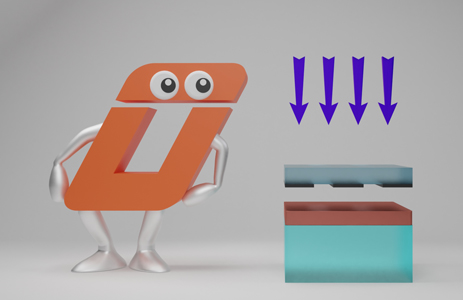
Let’s dive into one of the standout features of the UV-KUB equipment: specific optical addressing. Thanks to its intrinsic structure, the LED array actually enables highly optimized light collimation.
With 20+ years of expertise, KLOE has developed an unmatched optical collimation system, achieving a divergence angle of <1.5°, a level of precision unmatched in mask-based photolithography.
But why does collimation matter?
Here are the key benefits of optimized light collimation in photolithography:
1. High Resolution
The most obvious benefit is the optimization of critical dimension. Highly collimated light minimizes diffraction effects on the sample through the mask, unlocking ultra-high resolution.
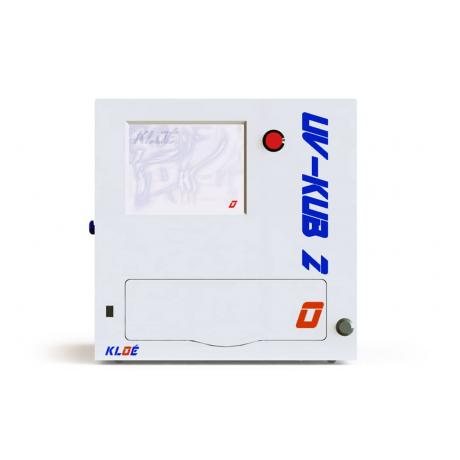
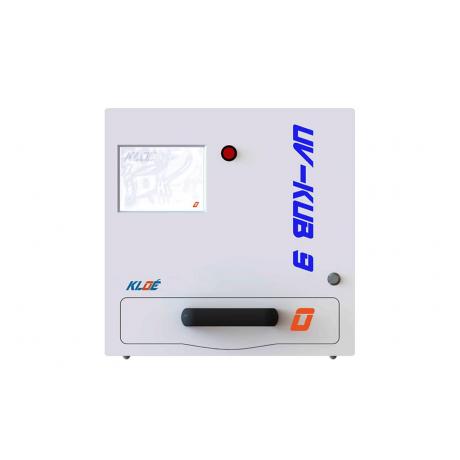
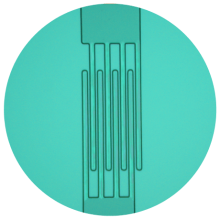
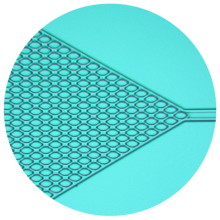
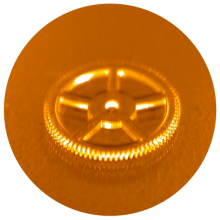
With the UV-KUB-2, structures down to 1µm can be written, and even smaller features are possible with the UV-KUB-3 mask aligner (≈ 0.7-0.8µm).
2. Thick Layer Processing
Optimized collimation provides exceptional depth of focus, allowing reliable writing in thick layers with unparalleled aspect ratios. This is particularly useful for applications like microfluidics.
KLOE’s users regularly print in layers up to 500µm thick, achieving aspect ratios up to 1:10 (width to height) in thick layers.
3. Enhanced Repeatability
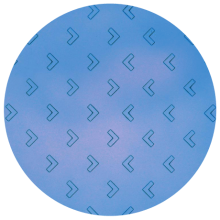
Even when aiming for more basic dimensions (10-100µm resolution, 1:2 aspect ratio), light collimation enhances process repeatability by making it less dependent on external factors.
Vacuum contact between substrate and mask is no longer necessary: the high depth of field ensures that mechanical contact is largely sufficient.
4. Simplified Visualization
The optics used for UV light collimation is also applied to the visible light to align masks and samples. No more hours spent trying to find a middle focus to see roughly both simultaneously.
With the UV-KUB-3, users can clearly view structures on both samples and photomasks, even with thick layers of several hundred micrometers.
Uniform light intensity is often considered key, but without proper collimation, it can’t guarantee true process uniformity. Reliable collimation not only ensures precision but also guarantees perfect structure homogeneity across the entire sample.
With KLOE’s collimation expertise, high resolution, repeatability, and process uniformity on thin and thick layers are no longer just claims, they are a guarantee.